The Main Pathways Linking Irrigation Water to Crop Quality
Three distinct but interconnected pathways determine how irrigation water shapes what ends up on the shelf: chemical composition, biological contamination, and irrigation management practice.
Salinity is the most studied chemical stressor. Elevated electrical conductivity forces plants to expend energy on osmotic adjustment rather than growth, reducing cell expansion and altering sugar-acid ratios in fruit tissue. Sodium and bicarbonates interfere with calcium and potassium uptake, directly affecting cell wall integrity and firmness. High pH can precipitate micronutrients like iron and manganese into unavailable forms, producing deficiency symptoms even in otherwise fertile soils.
Pathogens including Salmonella, E. coli O157:H7, and Listeria monocytogenes can attach to edible surfaces during overhead irrigation, with contamination risk increasing at higher microbial loads. Elevated total coliform counts also accelerate post-harvest deterioration, shortening storage life.
Irrigation scheduling and volume affect physical quality attributes directly. Excessive soil moisture before harvest causes cell over-expansion, producing fruit prone to cracking and reduced dry matter. Deficit irrigation, conversely, restricts size and marketable yield. Water quality, there's no denying, extends well beyond safety into sensory and commercial performance.
Chemical and Microbial Water Risks That Alter Marketable Quality
One of the most prevalent irrigation water problems that affect the quality of products is salinity. Highly conductive water incidents have impeded water uptake45 by reducing cell turgidity, thereby producing fruits that are too small in size, with compact texture and poor color development. When there is chloride accumulation, leaf scorching and accelerating senescence in leafy greens take place, and where boron predicts at most 1–2 mg/l, tip burn and internal necrosis will occur that disqualify the produce under most buyer regulations.
Conversely, cadmium and lead, which are heavy metals, and present in water pumped near industrial sites or in degraded catchments, can accumulate in edible tissues which causes disqualification through regulatory action. The silt load aggravates these risks when carrying adsorbed contaminants, while these also cause uniformity to decline of spray distribution.
Pathogens could be the result of contamination from surface water, reclaimed sources, or from poorly sealed storage tanks that put Salmonella, Listeria monocytogenes, and generic E. coli directly on the crop surfaces, decreasing the shelf-life of the crop, and creating direct compliance failures with food safety standards, such as those under the FSMA Produce Safety Rule.
Crop-Specific Effects on Fruit and Vegetable Quality Attributes
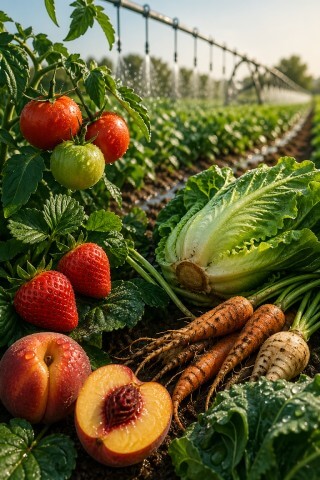
Salinity presents one of the more counterintuitive trade-offs in irrigated production: elevated electrical conductivity in water can increase soluble solids concentration in tomatoes and strawberries, improving perceived sweetness, yet simultaneously reduces fruit size and overall marketable yield. Firmness and skin finish in stone fruits are also sensitive to water mineral composition, with excess sodium contributing to surface blemishes and internal browning under certain rootzone conditions.
Leafy greens carry the highest contamination risk among vegetable crops, given direct foliar contact with irrigation water and minimal processing before consumption. Pathogens such as E. coli O157:H7 and Salmonella spp. adhere readily to leaf surfaces, and contaminated overhead irrigation is a documented transmission pathway in multiple outbreak investigations.
Root vegetables respond to inconsistent water quality through misshapen development and increased internal defects. Tip burn in lettuce – caused by localized calcium deficiency linked to irrigation management – reduces both appearance and shelf life. Bitterness in leafy brassicas can intensify under water stress or elevated nitrate loads, affecting sensory acceptability at point of sale.
Monitoring and Management Protect Both Quality and Compliance
Effective farm water management begins with source selection and protection. Growers should prioritize municipal supplies or tested groundwater over surface sources, which carry higher pathogen and sediment loads. Physical buffer zones around water intakes reduce contamination from runoff, livestock, and wildlife.
Routine testing is non-negotiable. At minimum, water should be analyzed for generic E. coli, pH, electrical conductivity, and selected heavy metals at least seasonally, with increased frequency during high-risk periods such as post-flood or post-rainfall events.
Matching water quality to crop sensitivity matters considerably. Leafy greens and strawberries, where edible portions contact irrigation water directly, warrant stricter thresholds than tree fruits. Drip irrigation reduces foliar and fruit-surface exposure substantially compared to overhead sprinklers.
Treatment options including filtration, UV disinfection, and chlorination should be integrated into formal water management plans alongside storage maintenance schedules and corrective action protocols. Recordkeeping supports both FSMA Produce Safety Rule compliance and traceability requirements increasingly demanded by commercial buyers.
Better Water Quality Supports Better Produce Quality
Water for crops used in each phase of production serves as an emulsified solution for nutrients and not just its carrier. Chemical properties- namely, salinity, pH, and the concentration of heavy metals in terms of nutrient uptake, cellular structure, etc., influence the produce grade based attributes and sensory qualitative attributes and some physical aspects. Microbial status or absence of it shape the risk of pathogens and postharvest safety. Mode of delivery determines up to what extent plant surfaces are exposed to contaminants. Together, these factors determine appearance, shelf life, food safety compliance, and commercial value, which cannot be fully addressed by any post-harvest intervention. Regularly monitoring water quality, coupled with crop-specific irrigation management, remains the most reliable practice for upholding produce quality, fulfilling regulatory requirements, and preserving the earning potential of horticultural production.
Explore More
- Fresh Produce & Food Safety in Australia and New Zealand
- Food Safety Standards in Australia & New Zealand
- Healthy Living with Fresh Produce
- Understanding Foodborne Illness & Prevention
- Organic vs Conventional Produce – What You Should Know
- How Irrigation Water Quality Shapes Fruit and Vegetable Quality
With the kind support: